Category: Architectural Icons

  • 12 Iconic Los Angeles Buildings Every Design Lover Should Know

    Ask ten Angelenos to name the famous buildings in Los Angeles and you will get ten different lists, which is itself a clue to the city’s architectural character. LA has never had a single skyline postcard the way New York or Chicago does. Instead, its icons are scattered across a hundred square miles: a Victorian office building with a heart of light, a concert hall like a ship under sail, a hilltop observatory that doubles as a movie star. What unites them is story. Every one of the twelve buildings below earned its fame not just through its looks but through the tale it tells about the city that built it. Consider this your essential syllabus, whether you are a visitor with a long weekend or a local finally ready to see your own city.

    The Famous Buildings in Los Angeles That Earn the Title

    1. Walt Disney Concert Hall (2003)

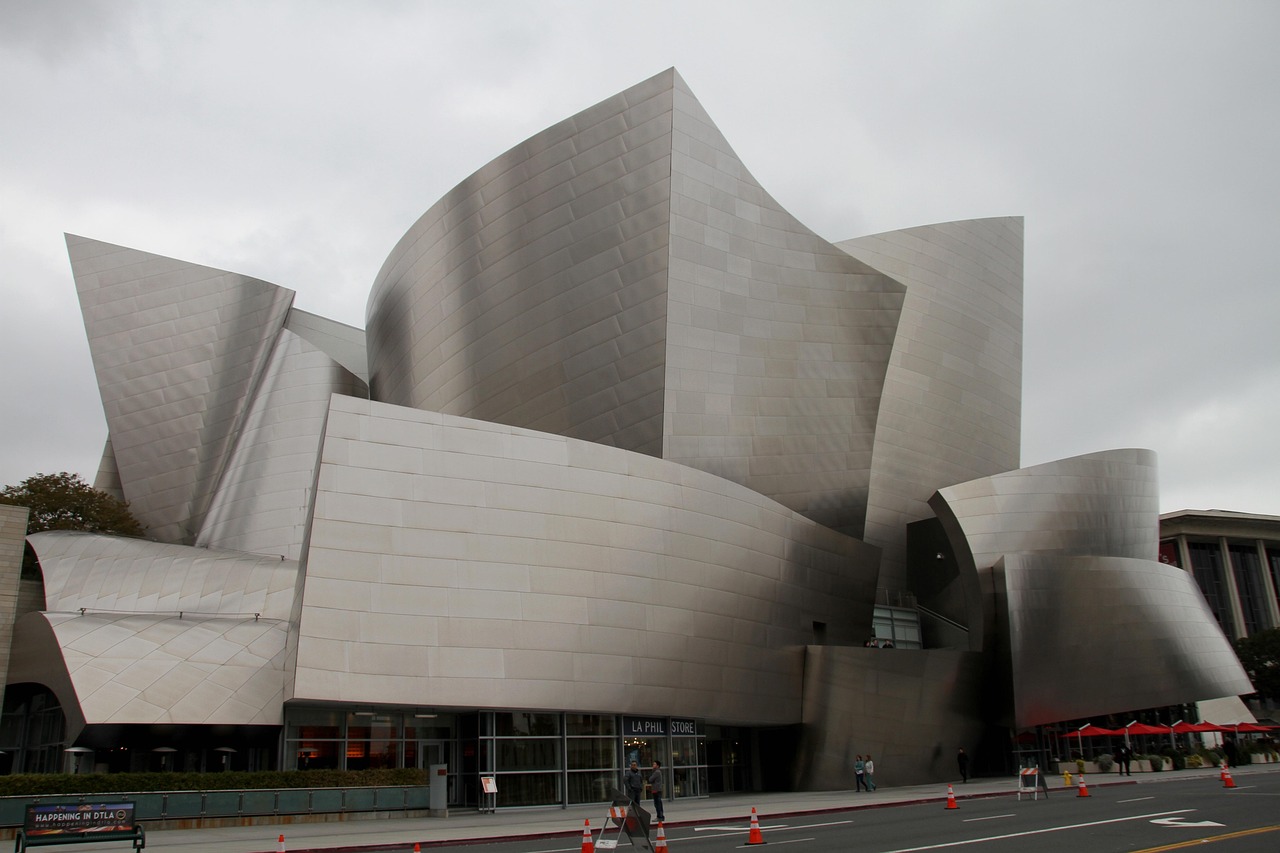
    Frank Gehry’s stainless steel sails on Grand Avenue took sixteen years to travel from competition win to opening night, surviving budget crises and civic doubt along the way. The wait produced the rare building that is both a sculptural landmark and a superb working instrument: the vineyard-style auditorium, wrapped in Douglas fir, is regarded as one of the finest concert rooms built in the last half century. We have explored its outsized effect on the city’s cultural life in our feature on how Disney Hall catalyzed LA’s artistic renaissance. Walk the exterior stair to the hidden rooftop garden, a secret most visitors miss.

    2. The Bradbury Building (1893)

    From the street, the Bradbury is a dignified brick Victorian at Third and Broadway. Step inside and the ceiling dissolves into light: a five-story skylit atrium laced with ornamental cast iron, open-cage elevators, and Belgian marble stairs. Draftsman George Wyman produced the design, reportedly inspired by a utopian science fiction novel, and science fiction returned the favor when Blade Runner made the atrium its haunted heart. The ground floor and first landing are open to visitors during business hours, making it the easiest transcendent interior in the city.

    3. Griffith Observatory (1935)

    Perched on the southern slope of Mount Hollywood, the observatory is the city’s great democratic monument: free to enter, as its benefactor Griffith J. Griffith insisted, and visited by millions every year. Its Art Deco domes and WPA-era murals would earn a place on this list on their own, but the building’s real genius is its role, giving every Angeleno a place to stand between the telescope above and the glittering city grid below. Sunset from the west terrace, with the Hollywood Sign to your right and the basin igniting at your feet, is the single best free show in Los Angeles.

    4. Eastern Columbia Building (1930)

    Claud Beelman’s turquoise and gold Art Deco tower on Broadway is the most photographed facade in Downtown, and deservedly so. Built as the flagship for the Eastern Outfitting and Columbia department stores, its glazed terracotta skin and four-faced clock tower crowned the city’s great shopping street at the peak of its glamour. After decades of decline, the building was converted to housing in the 2000s, a marquee success of the adaptive reuse movement that revived the historic core. The best view is from across Broadway in the late afternoon, when the terracotta turns electric.

    5. Getty Center (1997)

    Richard Meier’s hilltop acropolis in Brentwood took over a decade to build and remains the most ambitious cultural complex in the city’s history. Clad in cleft travertine and white metal panels, its pavilions, gardens, and plazas are organized around views that stretch from the ocean to the San Gabriels. Robert Irwin’s Central Garden provides the counterpoint, an artwork in living form that changes with every season. Admission is free, the tram ride up is half the fun, and the architecture is as much the exhibit as anything in the galleries.

    6. Hollyhock House (1921)

    Frank Lloyd Wright’s first Los Angeles commission, built for the oil heiress and arts patron Aline Barnsdall atop Olive Hill in East Hollywood, invented a new language Wright called California Romanza. Its tilted walls and abstracted hollyhock ornament suggest a Mayan temple dreaming of a movie set. In 2019 it became the city’s first UNESCO World Heritage Site, honored alongside seven other Wright buildings nationwide. The surrounding Barnsdall Art Park is a public treasure, and the restored interiors, open for touring most of the week, hold one of the great fireplaces in American architecture.

    7. Union Station (1939)

    The last of America’s great railway stations blends Spanish Colonial Revival romance with Streamline Moderne polish, a combination that could only have happened here and then. Designed under the father and son team of John and Donald Parkinson, its waiting room soars under painted wooden trusses, its floors run with inlaid marble and tile, and its garden patios offer orange-scented calm a few steps from the platforms. It still works hard as the hub of the region’s rail network, which means you can experience a masterpiece for the price of a transit fare.

    8. Los Angeles City Hall (1928)

    For its first three decades, City Hall was the only structure allowed to rise above the city’s height limit, and its stepped white tower became the emblem of civic Los Angeles, stamped on badges, letterheads, and a thousand movie establishing shots. The design, by a team including John C. Austin and the Parkinsons, mixes classical bones with Deco details, and its concrete famously incorporates sand from every California county and water from every mission. The free observation deck on the 27th floor is one of the city’s least known great views.

    9. Capitol Records Building (1956)

    The world’s first circular office tower rose just north of Hollywood and Vine as the new home of Capitol Records, and its resemblance to a stack of 45s on a spindle, whether intended or not, made it instant shorthand for the music business itself. Designed by Welton Becket and Associates with Louis Naidorf as project designer, it put Hollywood’s optimism into built form, down to the rooftop spire whose light blinks Hollywood in Morse code. The echo chambers buried beneath the parking lot shaped the sound of countless classic recordings.

    10. The Theme Building at LAX (1961)

    Four white parabolic legs crossing above the airport’s central plaza gave the Jet Age its cathedral. The design emerged from a team drawn from the offices of William Pereira, Welton Becket, and Paul R. Williams, and it distills the era’s conviction that the future would be worth flying to. The restaurant that once rotated diners over the runways has come and gone in various forms, but the building itself, seismically retrofitted and lovingly maintained, remains the purest piece of space age optimism in the city.

    11. Watts Towers (1921 to 1954)

    For 33 years, an Italian immigrant tile setter named Simon Rodia built a grove of openwork steel towers in his South LA backyard, wrapping rebar in wire mesh and mortar and pressing in broken tile, bottle glass, and seashells. He used no scaffolding, no welds, no blueprints. The tallest tower rises nearly 100 feet. When the city tried to demolish the towers as unsafe in 1959, a load test famously failed to budge them, and they are now a National Historic Landmark and a shrine of American outsider art. Guided tours run on weekends, and the adjacent arts center continues the neighborhood’s creative legacy.

    12. The Broad (2015)

    Across the street from Disney Hall, the museum built by philanthropists Eli and Edythe Broad wraps its galleries in a perforated white veil that the architects, Diller Scofidio + Renfro, designed to filter Grand Avenue’s harsh light into something gallery-soft. The honeycomb skin drapes over a concrete vault holding the collection, and visitors ascend through it in a tunnel-like escalator that makes arrival itself an event. General admission is free, and together with its Gehry neighbor it has turned a once-forbidding stretch of Bunker Hill into the city’s cultural front porch.

    How to See Them All

    Geography sorts the list neatly. A single Downtown day covers half of it: start at Union Station, walk El Pueblo, then Broadway for the Bradbury and Eastern Columbia, up Bunker Hill for Disney Hall and The Broad, and finish at City Hall’s observation deck. Our deep dive into Downtown LA’s adaptive reuse revival makes an excellent companion for that walk, since much of what makes the historic core lively again happened inside landmark shells like these. A second day pairs Hollyhock House and Griffith Observatory, both on hills overlooking Hollywood, with a drive-by of Capitol Records. The Getty deserves an unhurried third day, and Watts Towers a reverent morning with a booked tour. The Theme Building greets you on the way out of town, which feels appropriate.

    A practical note: the Downtown cluster is genuinely walkable and well served by Metro rail, so leave the car behind for that day. Book ahead where booking exists, since Hollyhock House tours, Watts Towers tours, and timed entry at The Broad all sell out on busy weekends. And carry water and sun protection for the hilltop sites; the Getty and Griffith both involve more outdoor walking than first-timers expect.

    Icons on Screen

    Part of what makes these buildings feel familiar even to first-time visitors is that the movies got there first. The Bradbury’s atrium has played everything from a dystopian apartment block to a detective’s office across nearly a century of filmmaking. Griffith Observatory anchored Rebel Without a Cause so memorably that a bust of James Dean now stands on its lawn. Union Station has doubled for airports, police headquarters, and other cities’ train stations in hundreds of productions, and City Hall served as the Daily Planet in the classic Superman television series. This screen afterlife is not trivia; it is a second architecture. Millions of people around the world hold mental images of these interiors without knowing their names, which is a kind of fame no other city’s buildings quite enjoy.

    Close Calls and Comebacks

    Nearly half of this list survived only because someone fought for it. The Bradbury had declined into shabby obscurity before a painstaking restoration in the early 1990s brought its ironwork and skylight back to glory. Watts Towers faced a demolition order until engineers and advocates proved their strength in a public load test that has entered civic legend. City Hall required a massive seismic retrofit after earthquake damage, emerging in 2001 with its terracotta crown restored. The Eastern Columbia sat underused for decades before residential conversion saved it, and even the Theme Building needed a major structural intervention after pieces of its stucco skin failed. The lesson repeats across the city: icon status is earned twice, first by the builders and then by the generations who refuse to let the buildings go.

    What the List Leaves Out, and Why That Is the Point

    Any dozen is an argument starter. A defensible alternate list could include the Gamble House in Pasadena, the Schindler House on Kings Road, the Stahl House in the hills, the Cathedral of Our Lady of the Angels, the Wiltern, the Hollywood Bowl, or the Eames House in the Palisades. That surplus of candidates is the real lesson of Los Angeles architecture: this city has never agreed on a single idea of itself, so it built monuments to all of them. Victorian optimism, Deco glamour, civic ambition, space age swagger, outsider devotion, and computational exuberance all stand within a few miles of one another, each certain it represents the true LA.

    That is why the famous buildings in Los Angeles reward slow attention rather than a checklist sprint. Each one crystallizes a moment when the city believed something fiercely: that commerce deserved cathedrals of light, that the stars belonged to everyone, that music needed a tower shaped like joy. See all twelve and you will have read a biography of Los Angeles written in steel, terracotta, travertine, and broken tile. Then start your own list, because the city is still writing.
  • The Cultural Influence of Frank Gehry’s Walt Disney Concert Hall on LA’s Artistic Renaissance

    The Cultural Influence of Frank Gehry’s Walt Disney Concert Hall on LA’s Artistic Renaissance

    The shimmering stainless steel exterior of Walt Disney Concert Hall.

    A Building That Changed Everything

    When the Walt Disney Concert Hall finally opened its doors in October 2003 after a tumultuous 16-year journey from conception to completion, few could have predicted the profound impact it would have on Los Angeles’ cultural landscape. Today, over two decades later, Frank Gehry’s masterpiece stands not just as an architectural icon, but as the catalyst for a remarkable artistic renaissance that continues to reshape the city’s identity.

    “Some buildings are simply buildings, and some buildings are turning points,” observes cultural historian Dr. Elena Martinez. “Disney Hall marked the moment when Los Angeles began to take itself seriously as a cultural capital—not just as an entertainment industry hub, but as a center for high art that could rival any city in the world.”

    Beyond the Stainless Steel: The Building as Experience

    To understand Disney Hall’s impact, one must first appreciate what makes the building itself so revolutionary. While its gleaming, undulating stainless steel exterior has become an instantly recognizable symbol of Los Angeles, the building’s true genius lies in how it reimagines the concert experience from the inside out.

    Gehry’s design upended conventional concert hall typology by placing the audience in a more democratic relationship with the performers. The vineyard-style seating configuration surrounds the orchestra on all sides, eliminating the traditional hierarchy between expensive front-row seats and distant balconies. This radical rethinking of spatial relationships creates a shared musical experience that feels simultaneously intimate and communal.

    “What Gehry understood is that architecture shapes social relationships,” explains acoustic architect Victoria Chen. “By reconfiguring how people physically experience music together, Disney Hall changed not just how we hear performances, but how we relate to each other as an audience. There’s a palpable sense of collective participation that’s unique to this space.”

    This experiential quality extends beyond the main auditorium. The building’s public spaces—its garden, its staircases, its unexpected viewpoints—create moments of wonder and discovery that transform a visit into a journey. Unlike traditional cultural institutions that can feel imposing or exclusionary, Disney Hall invites exploration and play, democratizing the experience of classical music by making the container itself accessible and joyful.

    “The building performs,” notes architectural critic Michael Sorkin. “It’s not static. It changes with light, with perspective, with your movement through it. This kinetic quality makes it perpetually new, perpetually alive.”

    The Catalyst for Downtown’s Revival

    When Disney Hall opened in 2003, Downtown Los Angeles was still struggling to establish itself as a viable residential and cultural district. Grand Avenue, envisioned as a cultural corridor since the 1960s, had the Music Center and MOCA but lacked the critical mass necessary to create a truly vibrant arts district.

    Disney Hall provided that critical mass. Its presence transformed Grand Avenue from a collection of disparate cultural institutions into a cohesive cultural destination, attracting visitors who might otherwise never venture downtown. More importantly, it signaled a vote of confidence in Downtown’s future, encouraging further development and investment.

    “Disney Hall created a gravitational pull,” explains urban planner James Wong. “It became a reason to come downtown, to stay downtown, eventually to live downtown. Its success challenged the conventional wisdom that Los Angeles couldn’t sustain an urban core.”

    The statistics bear this out. In the five years following Disney Hall’s opening, residential occupancy in Downtown increased by 30%, with particularly strong growth in the Grand Avenue corridor. New restaurants, hotels, and retail establishments followed, creating the ecosystem necessary to support a thriving cultural district.

    This transformation accelerated with the opening of additional cultural institutions along Grand Avenue, including The Broad contemporary art museum in 2015 and the renovated Music Center Plaza in 2019. Together with MOCA and the earlier Music Center pavilions, these venues have created the dense concentration of cultural offerings that defines successful arts districts worldwide.

    “What’s remarkable is how Disney Hall catalyzed not just commercial development, but a more diverse cultural landscape,” notes arts administrator Sofia Gutierrez. “It created a context where other arts organizations could flourish, from major institutions like The Broad to smaller experimental spaces that benefit from the increased foot traffic and cultural energy.”

    Reshaping LA’s Architectural Ambition

    Beyond its impact on Downtown’s revitalization, Disney Hall fundamentally changed Los Angeles’ architectural culture, elevating expectations for what public buildings could achieve and inspiring a new generation of ambitious designs across the city.

    “Before Disney Hall, Los Angeles had remarkable residential architecture but lacked significant contemporary public buildings,” observes architectural historian David Reed. “Gehry demonstrated that Los Angeles could produce public architecture of global significance, architecture that expressed the city’s creative energy rather than deferring to historical models or corporate blandness.”

    This shift in ambition is evident in projects that followed, from Renzo Piano’s design for the Academy Museum of Motion Pictures to Diller Scofidio + Renfro’s renovation of The Music Center Plaza. These designs share Disney Hall’s commitment to creating distinctive, experiential architecture that engages the public imagination rather than merely fulfilling functional requirements.

    Perhaps more significantly, Disney Hall influenced how local architects approach projects of all scales. The building’s technical innovations—its complex geometries made possible by advanced computational design, its sophisticated acoustic engineering, its integration of public and performance spaces—expanded what architects believed possible in the Los Angeles context.

    “Disney Hall raised the bar for everyone,” explains architect Maria Ramirez, whose firm has designed several performance spaces throughout Southern California. “It demonstrated that experimental form could coexist with technical excellence, that buildings could be both radically innovative and functional. That balance has influenced countless projects across the city, from cultural institutions to educational facilities to public infrastructure.”

    Transforming LA’s Musical Culture

    While Disney Hall’s architectural impact is immediately visible in the city’s changing skyline, its most profound influence may be on Los Angeles’ musical culture. As the home of the LA Philharmonic, the building has both reflected and enabled the orchestra’s evolution into one of the world’s most innovative and dynamic musical organizations.

    Under the leadership of conductors Esa-Pekka Salonen and later Gustavo Dudamel, the LA Phil has leveraged Disney Hall’s unique capabilities to reimagine the orchestral experience for the 21st century. The hall’s exceptional acoustics, designed by the renowned Yasuhisa Toyota, allow for unprecedented sonic clarity and range, enabling performances that would be impossible in traditional venues.

    “Disney Hall doesn’t just showcase music; it transforms how music is conceived and performed,” explains music critic Robert Chen. “Composers now write specifically for this space, exploiting its unique acoustic properties. Performers interact differently with audiences because of the spatial configuration. The architecture has become an active participant in the musical experience.”

    This partnership between architecture and musical innovation has attracted world-class talent to Los Angeles and expanded the city’s reputation as a serious music destination. Annual festivals like the Reykjavík Festival and Noon to Midnight have drawn international attention, while innovative programming that combines classical tradition with contemporary works has attracted younger, more diverse audiences.

    “What’s happening at Disney Hall isn’t just about preserving classical music traditions; it’s about reimagining what orchestral music can be in the contemporary world,” notes composer Ellen Reid. “The building embodies that forward-looking spirit—it honors tradition while pushing boundaries, creating space for experimentation within a framework of excellence.”

    Democratizing High Culture

    Perhaps Disney Hall’s most significant cultural contribution has been its role in democratizing access to classical music and high culture in Los Angeles. Through initiatives like the LA Phil’s Youth Orchestra Los Angeles (YOLA) program, which provides free instruments and instruction to students from underserved communities, and accessible ticket programs that make performances available to diverse audiences, the institution has worked to break down traditional barriers to cultural participation.

    The building itself supports this democratizing mission through its design. Unlike many traditional concert halls that emphasize exclusivity and formality, Disney Hall’s exuberant form and welcoming public spaces signal openness and accessibility. The garden and exterior areas, freely accessible to the public, integrate the building into the life of the city rather than sequestering cultural experience behind imposing facades.

    “Gehry understood that cultural buildings need to engage with public life if they’re going to remain relevant,” explains cultural policy expert Maria Johnson. “Disney Hall manages to be both a world-class performance venue and a public space, a place that honors artistic excellence while inviting broad participation.”

    This balance between excellence and accessibility has influenced how other cultural institutions in Los Angeles approach their missions. From The Broad’s free general admission policy to the Hollywood Bowl’s community-focused programming, the city’s cultural landscape increasingly reflects a commitment to serving diverse audiences while maintaining artistic standards.

    “What we’re seeing is a shift away from the cultural institution as temple toward the cultural institution as town square,” notes arts administrator David Garcia. “Disney Hall pioneered this approach in Los Angeles, creating a model for how high culture can engage meaningfully with community life.”

    The Gehry Effect: Global Recognition, Local Pride

    Walt Disney Concert Hall’s international acclaim—it frequently appears on lists of the world’s most significant contemporary buildings—has brought global attention to Los Angeles as a center for architectural innovation and cultural production. This recognition has helped shift perceptions of the city from entertainment industry company town to diverse cultural capital.

    “Disney Hall changed how the world sees Los Angeles, but more importantly, it changed how Los Angeles sees itself,” observes cultural critic Sophia Lee. “It created permission for the city to embrace its identity as a serious arts destination, not in imitation of New York or European models, but in its own distinctly Los Angeles way.”

    This newfound cultural confidence is evident in initiatives like Pacific Standard Time, the region-wide collaborative arts program that has highlighted Southern California’s unique contributions to global art movements. It’s visible in the proliferation of international art galleries establishing Los Angeles outposts, and in the growing recognition of the city’s homegrown artistic traditions.

    For many Angelenos, Disney Hall has become something more personal: a source of civic pride and a symbol of the city’s creative spirit. In a sprawling metropolis often criticized for lacking iconic public spaces, the building functions as a shared landmark that expresses collective aspirations rather than corporate or private interests.

    “When people think of Los Angeles, they increasingly think of Disney Hall alongside or even instead of the Hollywood sign,” notes urban sociologist Elena Martinez. “That’s significant because it represents a shift from seeing the city primarily through its entertainment industry to recognizing its broader cultural identity.”

    Looking Forward: The Continuing Influence

    As Walt Disney Concert Hall approaches its 25th anniversary, its influence continues to evolve. The building has aged remarkably well, both physically—its stainless steel exterior maintaining its luster with minimal maintenance—and conceptually, its innovative approach to cultural space remaining fresh and relevant in a rapidly changing urban landscape.

    The recently completed Grand LA development adjacent to Disney Hall, which includes residential towers, retail space, and a luxury hotel, represents the next phase of the Grand Avenue cultural corridor’s evolution. Designed by Frank Gehry in visual dialogue with his earlier masterpiece, this mixed-use complex extends the architectural language of Disney Hall while adding the residential and commercial components necessary for a truly vibrant district.

    Meanwhile, the LA Phil continues to expand its programming and community engagement, using Disney Hall as a platform for addressing contemporary social issues through artistic expression. Initiatives like YOLA and partnerships with local schools ensure that the building’s impact extends beyond those who attend performances to include young people throughout the region.

    “What’s remarkable about Disney Hall is how it continues to inspire,” notes conductor Gustavo Dudamel. “After all these years, we’re still discovering new possibilities in this space, new ways to connect with audiences, new sounds the hall can produce. Great architecture, like great music, reveals itself over time.”

    As Los Angeles faces the challenges of the 21st century—from climate change to social inequality to technological transformation—Disney Hall stands as proof that ambitious cultural projects can transcend their intended functions to become catalysts for urban revitalization, civic identity, and social change. In a city often criticized for prioritizing the ephemeral over the enduring, Frank Gehry’s masterpiece demonstrates the lasting power of architecture to shape not just space, but cultural possibility.


    Next week on Design Matters LA: “Hidden Gems: Underappreciated Architectural Treasures in Koreatown and Echo Park”